Political Prisoners: The Weakest Link
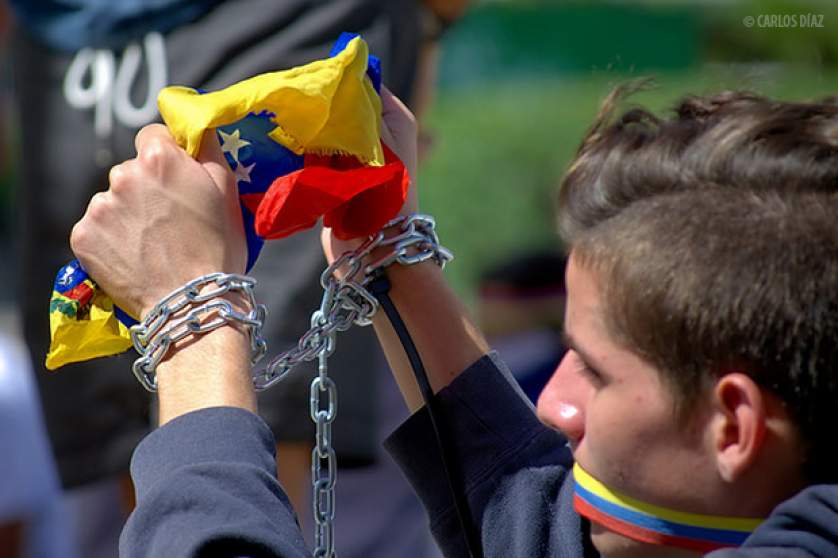
Political prisoners in Venezuela are at risk of being used as bargaining chips by the dictatorship that remains in power. According to the NGO Foro Penal, there are still 863 people arbitrarily deprived of liberty in the dungeons of Chavismo, sometimes without charges or having been presented before a judge. Their rights have been disregarded. They have been subjected to mistreatment, some tortured. Others live under a scheme of extortion, as they have to pay in dollars to their henchmen to maintain more or less decent conditions in their cells.
Under the dictatorship of Chávez and Maduro, Venezuela has experienced what is known there as the "revolving door." Some political prisoners are released with preccautrany measures—that is, they receive house arrest—but others enter. The system of terror and intimidation remains in place after Maduro's arrest and extradition along with his wife. The new president, as illegitimate as Maduro, seems unwilling to change the repression policy carried out by her predecessor and colleagues Diosdado Cabello, Minister of the Interior, and Vladimir Padrino López, Minister of Defense.
A first sign of willingness to change from now president Delcy Rodríguez would be to decree a general amnesty so that all political prisoners leave Chavismo's jails. So far, there are no indications that Chavismo is willing to move toward a transition to democracy. Its discourse remains defiant, and its actions continue along the lines of repression.
In the infamous Helicoide prison in western Caracas and in the headquarters of the General Directorate of Military Counterintelligence (DGCIM) located in the east of the capital, there are hundreds of civilian and military prisoners. They are the most defenseless of the defenseless in Venezuela. They are at the mercy of criminals in uniform. They must be released now. Their lives are in danger in these moments of uncertainty and fear.

Comments
Post a Comment